Showing posts with label Research. Show all posts

Wednesday, 25 February 2015

The Sketeton Key: Opening Credits That Influence My Own Work

The Skeleton Key


Notes:
- Fast pace cuts to represent the surreal action taking place within the movie.
- Unusual colours to represent iconographic confusion
- Font- looks like tombstone font. This may represent that there is a lot of death in this film? Maybe lots of near-death experiences?
- Faces aren't clear- they look pale and distorted like ghosts. Maybe they're already dead?
- Overall, it creates a lot of enigma.

Who is our Target Audience?

The typical target audience or Psychological Horror are people who are interested in the thrill from the adrenaline rush from the fear that is meant to be portrayed in these movies. the usual age demographic is teenagers and young adults ranging from about 15-30 years old, but that doesn't necessarily mean that people younger or older than those ages cannot enjoy them too. Psychological Horrors appeals to both gender demographics because it is not aimed at any specific gender- alternatively it is focused on allowing the audience to experiment with their fears and emotions. Stereotypically, men enjoy the gore and violence, while women enjoy the suspense and entertainment.

Why?
The film will normally used detailed plots with events that get the audience thinking or on the edge of their seats that includes plot twists the the fear of the film.
Most horror films are reviewed negatively due to the reviews being written by an older audience. However, if a teenager were to review it, the review would be more well done. This is due to the film being targeted at that specific audience.
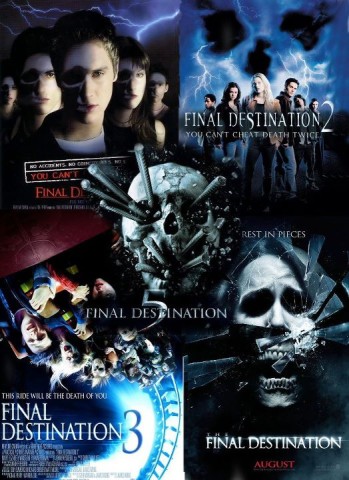
Films such as "Final Destination" are popular amongst teenagers because it appeals to them, due to the fact that the focus, in those films, is focused on young adult life. 

All "Final Destination" posters combined into one collage!

Monday, 26 January 2015

Production Credits

The Most Common Opening Credits Order

While there are many ways in which production credits can be presented, most opening credits use some variation of this basic order.
  • (NAME OF THE STUDIO)
Name of the studio distributed the film. (For instance, Walt Disney Pictures, Columbia, Lions Gate, Universal, etc.).
  • (NAME OF THE PRODUCTION COMPANY)
Name of the production company that actually made the film. You can also put the name of the investment groups or companies that financed a significant amount to the film (usually credited as "in association with" or "A (studio name) production.").
  • POSSESSORY CREDIT/S
The primary artistic credit of the film. This is, generally, the film director. Sometimes the producer or writer is specified too. This is normally credited as "A film by (name)" or "A (name) film". It is sometimes placed before a title. (E.g. "Alfred Hitchcock's Psycho").
  • STARRING
Main actors (Occasionally, the stars' and director's credits will be reversed, depending on the star's deal with the studio. In some cases, as in the Rodgers and Hammerstein films, or, like in many Disney films, the title of the film will be shown before the names of the actors. Sometimes, as in many of Cannon's films, the name(s) of the principal actor(s) will be shown before the name(s) of the producer(s), i.e. "The Cannon Group presents X in a Golan-Globus production of a Y film").
  • (FILM'S TITLE)
Name of the film.
  • FEATURING
Featured actors.
  • CASTING or CASTING BY
Casting director.
  • MUSIC or MUSIC COMPOSED BY or ORIGINAL SCORE BY
Composer of music.
  • PRODUCTION DESIGN or PRODUCTION DESIGNER
Production designer.
As a variation some of the below may be noted:
  • SET DESIGN
  • COSTUMES or COSTUMES BY or GOWNS (not so common now, as this specification was used in older movies)
  • HAIRDRESSER
  • MAKE-UP ARTIST
  • SOUND RECORDING (not so common now, as this specification was used in older movies)
  • VISUAL EFFECTS DIRECTOR or VISUAL EFFECTS BY
  • EDITOR or EDITED BY
Editor.
  • DIRECTOR OF PHOTOGRAPHY
Director of photography.
  • PRODUCER or PRODUCED BY, EXECUTIVE PRODUCER
Producers, co-producers, executive producers, (credited as 'also produced by') Often, though, the name of the producer will be the next-to-last opening credit, just before the director's name is shown.
  • BASED ON THE BOOK (PLAY, GRAPHIC NOVEL etc.) BY or FROM A PLAY/BOOK BY (older movies)
If based on a book or other literary work.
  • BASED ON THE CHARACTERS BY or BASED ON THE CHARACTERS CREATED BY
If based on characters from a book or other media.
  • (SCREEN) STORY or STORY BY
Person responsible for writing the story on which the script is based. This is credited, "story by" and is the first screenplay credit to appear, unless the script made significant changes to the story.
  • WRITER(S) or WRITTEN BY or SCREENPLAY or SCREENPLAY BY
Screenplay writers.
  • DIRECTOR or DIRECTED BY
Director.

Tuesday, 16 December 2014

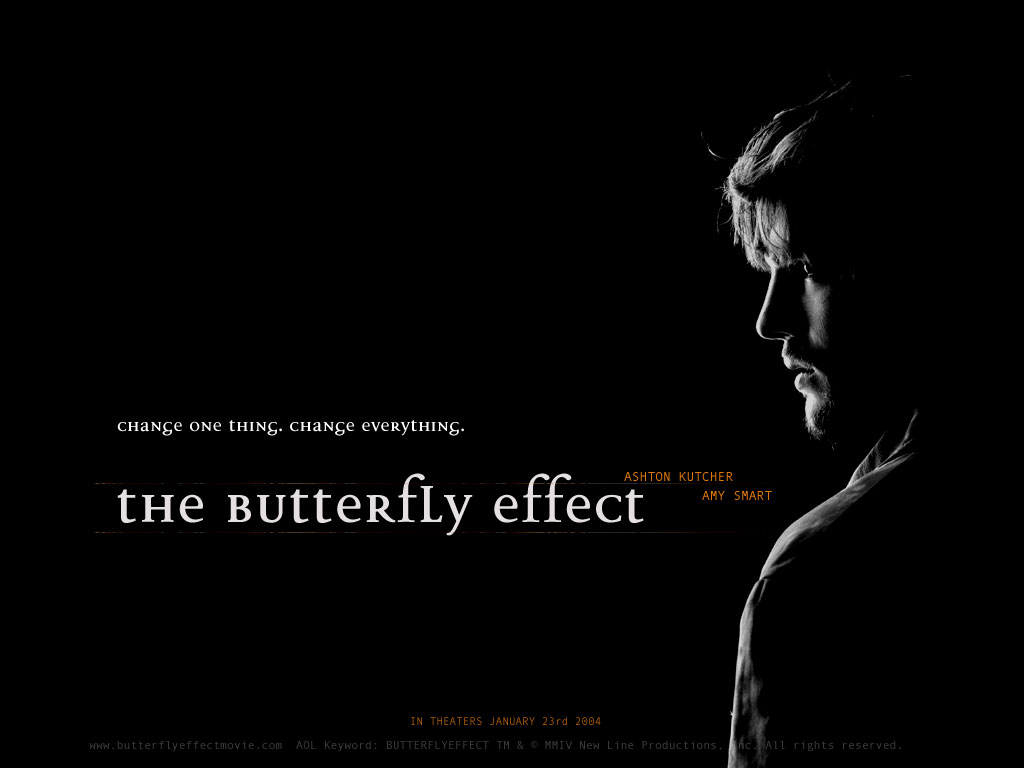
The Butterfly Effect Opening Sequence

Opening Sequences
Sequence 1: The Butterfly Effect Opening Sequence

How is genre introduced? 
The non-diegetic background music, more than anything else, represents the genre.  However, the music does conotate with the text, even though the opening sequence is just credits. The text does somehow indicate part of the genre.

0:00 - 0:07; It tells us who the producers of the film are. The text flickers, which gives the sense that the motive isn't clear. As we find out, the flickering is iconic because it gives us an insight of the main character's main problem- He finds it difficult to remember thing, so his thoughts are always flickering about, and therefore aren't clear. Therefore, the opening sequence is representative of the main character.
The music is also very dramatic, and it gets creepy once we get to the notepad part of the credits. The text creates enigma because the first piece of text you see on the notepad is "how do i fix it?!" and "you never lost me." This will make the audience ask questions, which will be answered, eventually, in the film.

0:08 - 0:13; We find out that this is an Ashton Kutcher movie. The music stays the same, giving it the same feel as before.
0:13 - 0:18; The music drastically changes-less dramatic more creepy! The pace of the text accelerates, as well as starting to flicker (which, we said before, is using iconography and representation of the main character's mental state.)

0:19 - 0:23; A new transition is used after we get introduced to "Amy Smart & Melora Walters"- they fizz out. (This is also representative because the main character subconsciously, fizzes out important memories, so he can't remember.) This may imply that she is a victim of what happens in the movie- maybe thanks to his mental well being?

0:24 - 0:28; We see a new piece of text, "do i have the power to heal them?" which creates more enigma. "Power? Power to control who?"
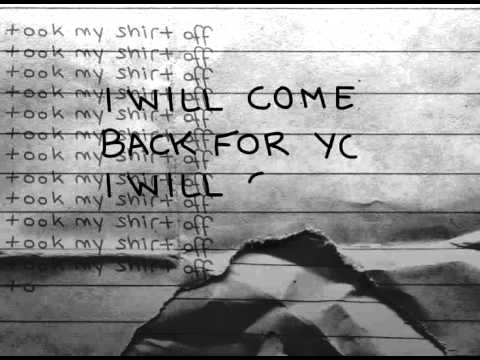
0:28 - 0:30; More enigma is created- "CUT THE ROPE". (Don't forget, the music is still creepy, it hasn't changed)

0:31 - 0:40; "I WILL COME BACK FOR YOU" is repeated, and then faded. This may give the impression that the character writing the credits is almost psycho-like? "took my shirt off' is repeated too- egotistical?

0:41 - End; We get the name of the movie.

The reason why this opening sequence is psychological horror, and not just horror is because the music messes with your head. You think something is going to happen, when really, nothing actually does. This is why the certificate on this film is 15+.

Thursday, 6 November 2014

Semiotics

Semiotics: the study of signs and symbols and their use or interpretation. It is a sign of the image/code/physical part that stands for a 'thing' or 'idea'. The thing that is the sign (the thing that means something) is called the signifier. What it means is called the signified. Signs that have literal meaning (denotation) and 'value added' meanings- things we associate with them, as individuals are as groups (connotation). The meanings signs are shared by groups of people. The understanding of the non-literal meanings of signs by a group is especially goverend by factors such as:

- Age
- Race
- Religion
- Country of residence 
- Cultural upbringing
- Schooling
- Class
- Our hobbies and habits
- Media experiences

 Meaning has to be shared by a group for the 'code' to work. 'Codes' have different numbers of people who are fluent in that 'code' 'Codes' are used everyday and include language (spoken), written language, moving images (TV, film), behavior at mealtimes, marriages, etc just to name a few. These are often called 'Discourse' in media studies. Signs can relate directly to what they re[resent. (i.e. look like what they stand for- called 'iconic') or they can be an arbitrary shape or sound that a group agrees to and not look anything like the thing they represent (called 'symbolic'). Signs that give or have meaning based on a relationship between the two are called 'indexical' (such as using smoke on warning sign to indicate fire)

OTHER FACTORS IN MEDIA STUDIES RELATED TO SEMIOTICS
Things are not usually black and white- they can be on a graded scale (called a 'Cline'), think about grades or degrees of heat/hotness. Users of the code (such as language or film) make choices relating to what happens next (called 'syntagm') This is like a sentence or the running order of scenes in a film; it's about choosing along the linear. Those same users also make choices at each point from a list of options (called a 'paradigm'), making a choice each time from a list. People associate ideas and things together and this is used to make meaning in the media. It's called contiguity (contiguous). People often use the characteristics of one thing to stand for the whole of it- so Big Ben for the Houses Of Parliament and/or for the UK Government, likewise the White House is used to stand for the president administration, or The Eiffel Tower for Paris. These meanings are called 'mentonymous' (metonsyms).
People's shared experiences, especially in media texts, allow for media text producers to refer to other media texts in their work. This is called 'intertextuality'- The Simpsons often does this when they 'do' The Simpsons versions of- for example- horror films. Theorists argue a lot about the extra meaning ('value added'- connotations). The audience or receivers of texts are often assumed to be/react or read a text a similar way. This similarity is called 'homogenous' (homogeneity). However, audiences are not the same, and they read things in different ways. They can be very diverse. Diversity in audiences is called 'hetrogeneity' (hetrogeneous). There are different types of signs as alluded to above:

- Icon: looks very like the thing being represented (e.g. Photograph)
- Index: suggests something related to the image (e.g. Smoke to indicate fire)
- Symbol: had agreed, shared meaning(s) not related to what the sign itself looks like, and those meanings can be quite 'deep'.

Signs that have more than one meaning are said to be polysemic. Because signs can have more than one meaning, the way they are grouped or places together is important- adding words for example anchors meaning. Images are places together carefully in groups to help the audience makes sense of what they're seeing.