Showing posts with label Analysis. Show all posts

Wednesday, 25 February 2015

The Sketeton Key: Opening Credits That Influence My Own Work

The Skeleton Key


Notes:
- Fast pace cuts to represent the surreal action taking place within the movie.
- Unusual colours to represent iconographic confusion
- Font- looks like tombstone font. This may represent that there is a lot of death in this film? Maybe lots of near-death experiences?
- Faces aren't clear- they look pale and distorted like ghosts. Maybe they're already dead?
- Overall, it creates a lot of enigma.

Friday, 16 January 2015

Opening Credits to 'Titanic' (1997)


Overall: The opening titles to 'Titanic' gives out an older, historic vibe overall. This is determined using a sepia filter to give it an old fashioned effect- as if to say that the footage was actually taken then (context of production- the video editor is trying to re-create the effect of 'olden day', non-coloured footage; colour in films was developed during the period of 1903-1935, so this was around about the same time as the actual Titanic event, [which happened in 1912.]).
The non-diegetic sets the mood for the entire movie- sad.  It has this effect because uses mellow instruments, and a soft, gentle, beautiful voice. This opening sequence would not have the same hard hitting effect as it does, if the music was loud, boisterous, and in the genre of Rock 'n' Roll.

Titles:

The colour white is used to stand out so that it is visible for the audience to see, but it is also used to blend in with the sepia effect. You could also say that the colour white symbolises clouds, or heaven to represent the innocent souls that lost their lives in the event. The text is used as a tribute.

Friday, 19 December 2014

Se7en Opening Sequence- Analysis

Click here to watch the opening sequence.

Overview on "Se7en":
- Distributor: New Line Cinema
- The opening sequence of Se7en gives the audience an insight into the film- it introduces the character of the killer (John Doe, played by Kevin Spacey). It also hints at the storyline.
- The title designer, Kyle Cooper, and director, David Fincher, sets the atmosphere of Se7en, as the disturbing film that it is, through their choice of shot and titles.
- Due to the horror/thriller genre, it is based at an audience of young adults.
- Se7en is a well known psychological thriller with horror elements, and I feel like this opening sequence is a great example for me to use, to create the base of my own physiological horror film. I do however know that in order to meet the marketing criteria, I will need to involve a range of shots and movement within my title sequence.

Genre:
- The introduction of the extreme close-up of hand the dark lighting immediately enforces and horror genre, due to the audience not being able to fully identify the character. This adds mystery and enigma to the opening sequence and makes the audience want to know more about the protagonist.
- The tone is quite sinister, due tot het use of Mise-En-Scene. Examples of this include crossing out children's faces.
- The title of the film also highlights that it is a horror film, by it's disoriented look, giving the impression that the audience is looking through the eyes of a psychopath.
- The opening sequence is edited with jump cuts and sudden movements which shocks the audience, putting them 'on the edge', therefore enforcing the thriller genre.

Themes and Typography:
The colours chosen at the beginning are dark, and dim lit, creating the mood and the atmosphere. The typography, used to display the names, are in a handwritten/graffiti font, to give it a distorted and abstract feel. It then gains a shadow, as it transitions to the next shot. This creates an disturbing and uncomfortable feeling for the audience, however it is not off-putting because the film is aimed at young, thriller-lovers.

Shots:
- The shots of the title sequence are a few seconds frames with quick cutaways, for focusing on one particular area. This makes the audience feel uneasy, as they feel like they are seeing something that they shouldn't be seeing.
- This creates the impression that they are witnessing the preparation of the action, which foreshadows what happens in the film.
- Another main focus is extreme close-ups onto objects. This limits the audience's vision, creating enigma.

Shot types:
The opening sequence is made up of many extreme close ups that work together to create a montage. This is effective at intriguing the audience by providing them with detail and distancing them by not showing any wider shots, that will give them more information about the character. This can be effective at creating a tense atmosphere for an audience by showing minimal full length character shots. This inspires me to vary the amount of shots in my film, as well as using mise-en-scene to create an uncomfortable feel.

Mise-En-Scene:
- The opening sequence is full of unusual and creepy mise-en-scene, such as pictures of victim's faces being rubbed out by black marker pens. Straight away, this makes the audience feel a sense of discomfort.
- The audience is exposed to the word 'God' being cut out of a dollar bill/ This hints that the character believes in God.

Editing & Colour:
The editing that went into the opening sequence lasted five weeks compared to the two days it was shot over. This can be seen because of how advanced the editing is, with the use of dissolving transitions. This makes the audience feel disjointed.
The colour used is a washed-out grey-tone. These dull connotations, combined with flashes of red which appear randomly, give the sense that there is a lot of violence in the film.

Music:
The music chosen and used by Howard Shore is a remix of Nine Inch who are known for their association with dark and gruesome imagery. The music is gritty and reflects the overall disterbing tone of the film. As the msic increases in tempo. the random images begin to flash and pop up more frequently, making them difficult to follow. Ths creates a sense of urgency. The effect of repetition of some images creates a feel of unease and disorganisation. The disturbing sound effects (for instance, the nails scratching on a chalk board) conveys an unnatural atmosphere, which makes the audience feel uncomfortable.

Characters:
There are minimal shots of characters in the opening sequence. In doing this, the audience is alienated, as enigma is created due to the limited shots of character. This is effective because it adds more suspense and tension, which is what a horror/thriller should do.

Credits:
The titles appear distorted and flash onto the screen. This creates the a psychotic feel.
The protagonist's credits (John Doe played by Kevin Spacey) does not appear, which conveys the mystery behind the villain because the audience has limited information.

Tuesday, 16 December 2014

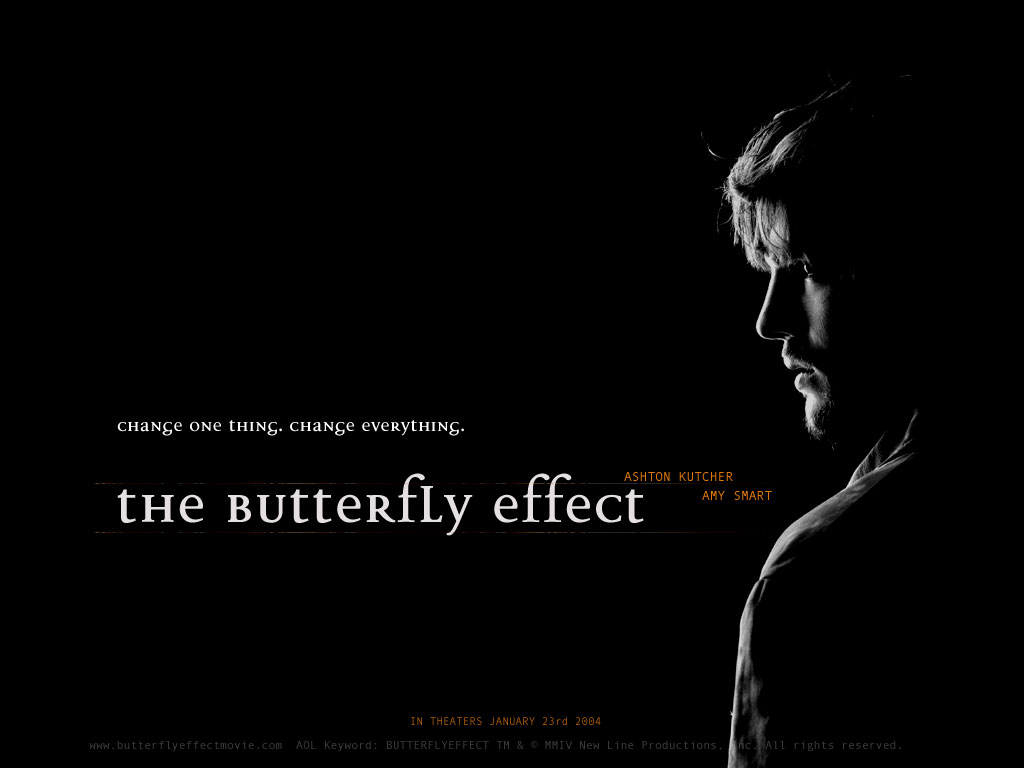
The Butterfly Effect Opening Sequence

Opening Sequences
Sequence 1: The Butterfly Effect Opening Sequence

How is genre introduced? 
The non-diegetic background music, more than anything else, represents the genre.  However, the music does conotate with the text, even though the opening sequence is just credits. The text does somehow indicate part of the genre.

0:00 - 0:07; It tells us who the producers of the film are. The text flickers, which gives the sense that the motive isn't clear. As we find out, the flickering is iconic because it gives us an insight of the main character's main problem- He finds it difficult to remember thing, so his thoughts are always flickering about, and therefore aren't clear. Therefore, the opening sequence is representative of the main character.
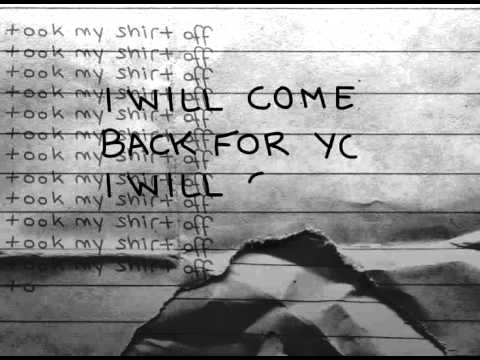
The music is also very dramatic, and it gets creepy once we get to the notepad part of the credits. The text creates enigma because the first piece of text you see on the notepad is "how do i fix it?!" and "you never lost me." This will make the audience ask questions, which will be answered, eventually, in the film.

0:08 - 0:13; We find out that this is an Ashton Kutcher movie. The music stays the same, giving it the same feel as before.

0:13 - 0:18; The music drastically changes-less dramatic more creepy! The pace of the text accelerates, as well as starting to flicker (which, we said before, is using iconography and representation of the main character's mental state.)

0:19 - 0:23; A new transition is used after we get introduced to "Amy Smart & Melora Walters"- they fizz out. (This is also representative because the main character subconsciously, fizzes out important memories, so he can't remember.) This may imply that she is a victim of what happens in the movie- maybe thanks to his mental well being?

0:24 - 0:28; We see a new piece of text, "do i have the power to heal them?" which creates more enigma. "Power? Power to control who?"

0:28 - 0:30; More enigma is created- "CUT THE ROPE". (Don't forget, the music is still creepy, it hasn't changed)

0:31 - 0:40; "I WILL COME BACK FOR YOU" is repeated, and then faded. This may give the impression that the character writing the credits is almost psycho-like? "took my shirt off' is repeated too- egotistical?

0:41 - End; We get the name of the movie.

The reason why this opening sequence is psychological horror, and not just horror is because the music messes with your head. You think something is going to happen, when really, nothing actually does. This is why the certificate on this film is 15+.


Wednesday, 10 December 2014

Art Of The Title: Anatomy Of A Murder (1959)

Typography elements:
The music used in the opening of 'Anatomy Of A Murder' suggests that the theme of the film is a crime/thriller one, as the music creates a sense of suspense and mystery. Connotations with 'mystery' is 'crime' and 'detectives', which connotes with fast action. The jazzy sounds not only enhances this view, but it is also used to build tension.
The transition of the shots are also very quick, building suspense. It also creates enigma because it makes the viewer wonder who the body is, adding to the idea that it is a crime/thriller driven movie.

Monday, 1 December 2014

Opening Sequence - Harry Potter and The Philosopher's Stone


 - The producers of the film are the Warner Brothers

- The music sets the genre; An epic fantasy adventure.

- Owl = Iconography for later on in the movie series

- Establishing shot  to set the scene- a dark place = mystery & tension

- Albus Dumbledore = Stereotypical wizard (Mise-En-Scene) to indicate that this movie is going to be based around witches and wizards. (Also, introduction to our first character = he is very significant = creating enigma "Who is he?")

- Slower cutting of the first look at 'wizardry action' to (1) give the audience the time to take in that he is actually a wizard, rather than just assuming that he is an old man going trick or treating (for example) and (2) to give the sense that the action is taking place slowly.

- Introduction to both significant wizard characters and their status; Professor McGonagall and Albus Dumbledore. From the dialogue, you can see that McGonagall is the follower and Dumbledore is the leader because he knows all the answers to her questions.

- Hagrid: Low angle suggests that he is big in size (not status- his size actually contrasts status- although he is the biggest, he has the lowest status out of all three of them)

- Enigma about Harry

Sunday, 9 November 2014

Denotation and Connotation

Denotation: The "literal" meaning of something, an image or idea.
Connotation: The extra added meanings that we attach to images, objects and ideas that are bit "lieral" byt based on our experience, culture, age, gender etc. They are often shared within group e.g. people of a similar age, people from a parcicular religion or country. Connonations are usually:
- Shared
- Similar
- Influenced by each other, the media and personal experience.

They are aften understood and shared by groups/ These groups can be based on many things, including:
- Race
- Age
- Geography (Where we live)
- Gender
- Occupation

Sometimes when reading a text, a person may read the text differently than was perhaps expected by the text's producers- this is sometimes a partial acceptance of the 'intended' meaning, and sometimes a complete rejection of it. These are called negotiated and aberrant readings respectively.

Saturday, 8 November 2014

Lighting

Lighting is an important signifier in that it conveys the mood or atmosphere of the scene we are observing. In a studio, the lighting is usually from three sources and is set up as following:

The Key Light: Usually the brightest and the most influential.
The Back Light: Helps counteract the effect of key light, thus making the figure (or subject) more 'rounded'
The Filler Light(s): Helps to soften the harsh shadows that the use of back and key light creates.

High Key and Low Key Lighting:

The director manipulates this basic format to achieve the atmosphere s/he wishes to convey. If s/he only used the key and back lights, they will produce a sharp contrast of dark and light areas on the screen as the shadows are formed. This is known as low-key lighting and is often seen as expressive.  High-key lighting means that more filler lights are used. This will appear more normal and realistic to out eyes but can also be manipulated to give more of a glamorous appearance to a star's face or add a 'twinkle' to their eyes (This 'twinkle' is called a catchlight)

Friday, 7 November 2014

Mise-En-Scene

Mise-En-Scene includes:
- The Setting
- The Costume and Makeup
- The use of figure, expression and movement by actors
- The Lighting
- The Positioning within the frame

THE STYLE SCALE:
Formalism & expressionism
- Form over content: how things are shown is most important, and beyond a usual representation of reality. Expressionist films are highly stylise, and are characterised by oblique camera angles, distorted shapes, bizarre setting, high contrast lighting and surreal and subjective.
- Realism
- Content over form: looks like real life- the intent is to make up forget it is a representation. This is the dominant style of most films, and is sometimes referred to as "the style of no style"

SETTING:
Setting gives a sense of place and time.Whatever the film is, you should always anaylse the set, because it provides important clues about the nature of the film, such as:

- Where the action takes place
- When the action takes place
- The mood
- The characters
- The genre of the film

COSTUME AND MAKEUP:
Costume and makeup can be considered as part of the set, because they indicate:
- The period
- The state of society
- Social class
- Cultural backgrounds
- Character traits

Changes in costume indicte changes in character, for example:
- Rich to poor
- Taking off clothes as lowering defences
- Clothing may also be a trademark

FIGURE, EXPRESSION AND MOVEMENT:
- Body language
- Appearance
- Facial Expression (very significant in close ups)
- Sound elements
- The way a character stands and moves is important
- If they are in the foreground, they may be considered to be more important
- If they move against a stationary background, attention is drawn to them
- Even distribution of characters makes for a balanced shot, whereas uneven distribution is unsettling to the eye
- Positioning of characters within the frame may even indicate emotional distance

STUDENT NOTE: Questions to use when analysing-
- Dominant- where is our eye attracted to first? Why?
- Lighting Key- is the lighting high or low key? High contrast? A combination?
- Shot and camera proxemics- what type of shot is it? Camera distance?
- Angle- low? High? Oblique? Neutral?
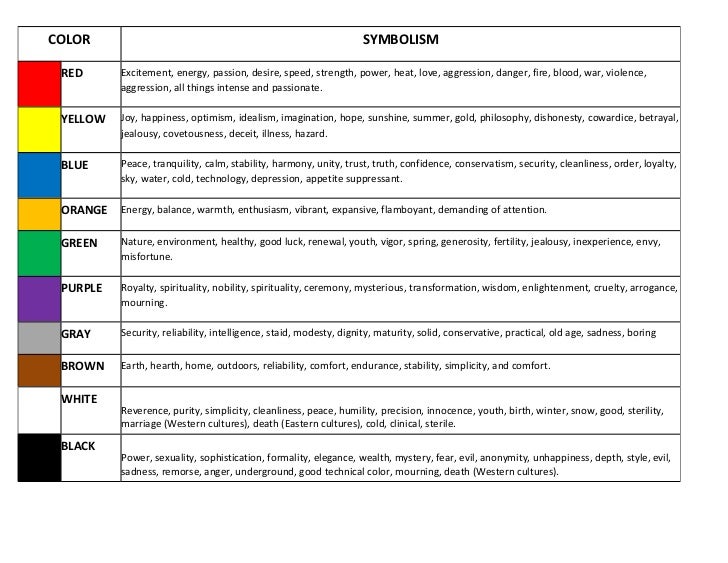
- Colour values- what colours/hues are dominant? What is the colour symbolism?
- Lens/filter/stock- are these used to distort or comment on the scene?
- Subsidiary contrasts- what are the main eye-stops after the dominant?
- Density- how much visual information is there? What is the texture?
- Composition- how is the screen space segmented and organised?
- Form- Open or closed? Window view or proscenium arch?
- Framing- Tight or loose? Do the characters have room to move?
- Depth- how many planes of depth are utilised? How do they interrelate? 
- Staging positions- How are they positioned in relation to each other?

Saturday, 1 November 2014

Introduction to "Film Language"

Film Language consists of many aspects. These aspects of a film help to create meaning for the audience, therefore, creating understanding.

EDITING- STYLES:

- Straight Cut
- Jump Out
- Fade
- Wipe
- Dissolve
- Graphic Match

MISE-EN-SCENE:
- Setting
- Props
- Hair/Makeup
- Facial Expressions
- Body Language
- Lighting and Colour
- Positioning within the frame


USE OF CAMERA:

FRAMING:
- Close Up
- Extreme Close Up/Big Close Up
- Mid Shot
- Long Shot
-Extreme Long Shot
- Point Of View
- Subjective
- Master Shot/Establishing Shot
- Over The Shoulder Shot
- Two Shot
- High Angle

MOVEMENT:
- Pan
- Track
- Tilt
- Roll
- Zoom
- Crane
- Crash Zoom
- Whip Pan
- Arc
- Steadicam
- Aerial Shot
- Hand Held

SOUND:
- Diegetic Sound
- Non-Diegetic Sound
- Parallel/Contrapuntal sound
- On/Off Screen Sound
- Sound Bridges

LIGHTING & SOUND:
- Low-Key Lighting
- High-Key Lighting
- Back-Lighting
- Top-Lighting
- Underlighting