Tuesday, 12 May 2015
Final Piece- LOCKED
Overall, I am very satisfied with our AS Media Studies short film- the experience was not only jam packed with learning new things, but it was also a lot of fun to film!

Monday, 13 April 2015
Evaluation: Question 7
Looking Back At Your Preliminary Task, What Do You Feel You Have Learnt In The Progression From It To The Full Product?
(video)
(video)
Tuesday, 7 April 2015
Evaluation: Question 6
What Have You Learnt about Technologies From The Process Of Constructing This Product?
(video)
The music seems to louden drastically while I talk at around 1:37, so you cannot hear when I say, "which could create suspense and tension."
(video)
The music seems to louden drastically while I talk at around 1:37, so you cannot hear when I say, "which could create suspense and tension."
Friday, 3 April 2015
Evaluation: Question 5
(video)
How did You Attract/Address Your Audience?
https://youtu.be/JETh4RW0kdA
Like I discussed in Question 4, our audience likes to live life 'on the edge', and they like to do things that give them an adrenaline rush. I took this into account when thinking of ways as to how to attract our mass audience to see our film, and how our opening sequence could do so. I looked at ways as to how my film can appeal to our mass audience on a personal scale, as well as on a media language scale.
Firstly, my protagonist is a similar age to our mass audience (my mass audience is students) I displayed her student status by making her study. This is so that the mass audience can distinguish a common ground with her, and will therefore start to make a primary connection through that.
My film is aimed at young people who watch horror movies, such as Silent Hill, Paranormal Activity, Scream, and etc. Because my film is a psychological horror, our audience will therefore be interested, due to the fact that they are most likely horror movie fanatics.
My film conforms to the expectations of the horror movie opening sequence schema. The sequence has started with the Female Victim- the character who is first affected by the antagonist.
The build up of enigma, and the suspense that is built up before the protagonist's 'death' is shown via running monologues and continuity editing, in order to give the viewer clear understanding of what is going on, but at the same time, being precautious as to ensure that too much information isn't given away (for example, the argument of whether the antagonist is human or not, due to their supernatural ability to disappear).
How did You Attract/Address Your Audience?
https://youtu.be/JETh4RW0kdA
Like I discussed in Question 4, our audience likes to live life 'on the edge', and they like to do things that give them an adrenaline rush. I took this into account when thinking of ways as to how to attract our mass audience to see our film, and how our opening sequence could do so. I looked at ways as to how my film can appeal to our mass audience on a personal scale, as well as on a media language scale.
Firstly, my protagonist is a similar age to our mass audience (my mass audience is students) I displayed her student status by making her study. This is so that the mass audience can distinguish a common ground with her, and will therefore start to make a primary connection through that.
My film is aimed at young people who watch horror movies, such as Silent Hill, Paranormal Activity, Scream, and etc. Because my film is a psychological horror, our audience will therefore be interested, due to the fact that they are most likely horror movie fanatics.
My film conforms to the expectations of the horror movie opening sequence schema. The sequence has started with the Female Victim- the character who is first affected by the antagonist.
The build up of enigma, and the suspense that is built up before the protagonist's 'death' is shown via running monologues and continuity editing, in order to give the viewer clear understanding of what is going on, but at the same time, being precautious as to ensure that too much information isn't given away (for example, the argument of whether the antagonist is human or not, due to their supernatural ability to disappear).
Saturday, 28 March 2015
Evaluation: Question 4
(video)
Who is our target audience?
Our target audience is young people of both genders, aged 15-25, who like watching psychological horror movies.
Age
The age of our target mass audience is teenagers, aged 15-25 years old. One reason for this is because protagonist within the same age demographic; she is 17 years old. This means that the audience is able to relate to her, and therefore, will sympathise and make a primary connection with her, as she is the main character.
Tastes in Media
Our audience are interested in the broadened range of the genre of horror movies. They watch horrors such as Black Swan (2010), The Ring (2002) and Silent Hill (2006). They like the feeling of being ‘on the edge’ and love the adrenaline rush when the unexpected hits them. They are wired to psychological horrors to experience and enjoy the high levels of psychological arousal. Lifestyle Our age demographic like to live life ‘on the edge’. They are almost daredevil like, as they like to experience things that give them a sense of adventure- things that give them an adrenaline rush, just like the feeling a psychological horror gives them. For instance, they are fans of roller-coasters, skydiving, and extreme sporting activates, such as rock climbing.
Film Consumption Habits
Our age demographic earns disposable income, so they can afford to go to the cinema to watch films. However, because they are young, they do have modern and alternative ways to watching films, such as YouTube, Netflix, Blu-Ray, Sky Movies, iTunes and game consoles.
Thursday, 26 March 2015
Evaluation: Question 3
What Kind Of Media Institution Might Distribute Your Media Product And why?
 |
| (poster) Typos: *I've taken into account *causing fans to 'hype up' the movie |
Wednesday, 25 March 2015
Monday, 23 March 2015
Monday, 9 March 2015
Wednesday, 25 February 2015
The Sketeton Key: Opening Credits That Influence My Own Work
The Skeleton Key
Notes:
- Fast pace cuts to represent the surreal action taking place within the movie.
- Unusual colours to represent iconographic confusion
- Font- looks like tombstone font. This may represent that there is a lot of death in this film? Maybe lots of near-death experiences?
- Faces aren't clear- they look pale and distorted like ghosts. Maybe they're already dead?
- Overall, it creates a lot of enigma.
Who is our Target Audience?
The typical target audience or Psychological Horror are people who are interested in the thrill from the adrenaline rush from the fear that is meant to be portrayed in these movies. the usual age demographic is teenagers and young adults ranging from about 15-30 years old, but that doesn't necessarily mean that people younger or older than those ages cannot enjoy them too. Psychological Horrors appeals to both gender demographics because it is not aimed at any specific gender- alternatively it is focused on allowing the audience to experiment with their fears and emotions. Stereotypically, men enjoy the gore and violence, while women enjoy the suspense and entertainment.
Why?
The film will normally used detailed plots with events that get the audience thinking or on the edge of their seats that includes plot twists the the fear of the film.
Most horror films are reviewed negatively due to the reviews being written by an older audience. However, if a teenager were to review it, the review would be more well done. This is due to the film being targeted at that specific audience.
Films such as "Final Destination" are popular amongst teenagers because it appeals to them, due to the fact that the focus, in those films, is focused on young adult life.
Why?
The film will normally used detailed plots with events that get the audience thinking or on the edge of their seats that includes plot twists the the fear of the film.
Most horror films are reviewed negatively due to the reviews being written by an older audience. However, if a teenager were to review it, the review would be more well done. This is due to the film being targeted at that specific audience.
Films such as "Final Destination" are popular amongst teenagers because it appeals to them, due to the fact that the focus, in those films, is focused on young adult life.
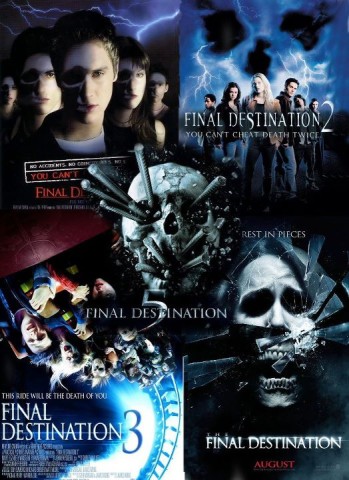 |
| All "Final Destination" posters combined into one collage! |
Questionnaire: Feedback
Questionnaire
Name:
Age:
1) What is your favourite movie genre?
2) How do you watch films? (Cinema?
Netflix? Sky+?)
3) What is your favourite film?
4) What do you like most about your
favourite film?
5) What do you think psychological horror
films should involve?
6) How would you feel if you were the main
character of our film plot?
Feedback:
Alisha Mak
16
1) I like action and superhero movies.
2) I go to the cinema or rent DVDs from my
local library
3) My favourite film is...umm... I don't
have one! I guess the Avengers is pretty good.
4) The fight scenes and the characters
5) I don't watch psychological horror
films, but I guess they should involve scenarios that are terrifyingly close to
real life situations
6) If I was your character, I would try and
do things that weren't in my dream to prevent getting murdered. For example, if
I dreamt I went to the library to hide, instead I would go somewhere else.
Questionnaire
Name: Hannah Woollaston
Age: 17
1) What is your favourite movie genre?
Comedy and action adventure
2) How do you watch films? (Cinema? Netflix? Sky+?)
Cinema and freeview
3) What is your favourite film?
Kingsman
4) What do you like most about your favourite film?
It was funny but was also overall a good story and the charcters were believable and you felt what they felt as the actors were good. I also like the fact that the story developed at an approptiate pace, it didn’t skip parts and made it confusing, but it didn’t spend too long on something that really could have happened/been explained in 5 minutes
5) What do you think psychological horror films should involve?
I don’t know very much about psychological horror films but it should be believable, as it isn’t going to scare them is its ridiculously unrealistic (and may even be funny). I think it should also be scary, but not by jump scares, maybe creepy or strange (as I know of a film called ‘the one hour photograph’ where a photo developer has been developing this family’s photos for a long time, and has got to know the mother and the son quite well, but he keeps copies for himself. I’ve never seen it though, but perhaps it is scary as it could actually happen and without someone knowing)
6) How would you feel if you were the main character of our film plot?
I would feel scared and regret staying to study late when hearing the suspicious things. But then when I wake up I would feel relieved that I was still alive (as all the studying didn’t go to waste!) and want to exit the school as soon as possible. But then when I start hearing suspicious things just like the dream I would be confused and feel a sense of déjà vu that the situation is actually happening (and maybe a sense of the supernatural having been able to foresee what was going to happen) and probably then regret knowing I am going to be killed and that my last moments were spent in school instead of seeing family or friends. I’m not too sure, but also feel sorry for whover discovers my body the following morning (assuming it doesn’t take place on a Friday evening)
Questionnaire
Name: Hannah Woollaston
Age: 17
1) What is your favourite movie genre?
Comedy and action adventure
2) How do you watch films? (Cinema? Netflix? Sky+?)
Cinema and freeview
3) What is your favourite film?
Kingsman
4) What do you like most about your favourite film?
It was funny but was also overall a good story and the charcters were believable and you felt what they felt as the actors were good. I also like the fact that the story developed at an approptiate pace, it didn’t skip parts and made it confusing, but it didn’t spend too long on something that really could have happened/been explained in 5 minutes
5) What do you think psychological horror films should involve?
I don’t know very much about psychological horror films but it should be believable, as it isn’t going to scare them is its ridiculously unrealistic (and may even be funny). I think it should also be scary, but not by jump scares, maybe creepy or strange (as I know of a film called ‘the one hour photograph’ where a photo developer has been developing this family’s photos for a long time, and has got to know the mother and the son quite well, but he keeps copies for himself. I’ve never seen it though, but perhaps it is scary as it could actually happen and without someone knowing)
6) How would you feel if you were the main character of our film plot?
I would feel scared and regret staying to study late when hearing the suspicious things. But then when I wake up I would feel relieved that I was still alive (as all the studying didn’t go to waste!) and want to exit the school as soon as possible. But then when I start hearing suspicious things just like the dream I would be confused and feel a sense of déjà vu that the situation is actually happening (and maybe a sense of the supernatural having been able to foresee what was going to happen) and probably then regret knowing I am going to be killed and that my last moments were spent in school instead of seeing family or friends. I’m not too sure, but also feel sorry for whover discovers my body the following morning (assuming it doesn’t take place on a Friday evening)
Wednesday, 28 January 2015
Planning Our Own Opening Sequence
 |
| This screen-grab was taken from our group blog. This is only the storyboard, and not a script, due to the fact that there is no real dialogue our opening sequence when we planned the opening sequence. We added in a voiceover at short notice. |
The Voiceover's dialogue:
The voiceover was all done by the main actor of our short film, because it is a flashback of her memory, therefore it is in her point of view.
(The very beginning, when we are first shown her face):
"February 13th. it was Friday after school. I was studying English in an empty science room, just because they're always quiet. I didn't realise how late it was. It all started with a knock."
(Later one, when she turns around after running out of the building"):
"Someone was defiantly following me."
(Very last scene):
"I thought I was dead. But that was just the beginning."
Monday, 26 January 2015
Production Credits
The Most Common Opening Credits Order
While there are many ways in which production credits can be presented, most opening credits use some variation of this basic order.- (NAME OF THE STUDIO)
- Name of the studio distributed the film. (For instance, Walt Disney Pictures, Columbia, Lions Gate, Universal, etc.).
- (NAME OF THE PRODUCTION COMPANY)
- Name of the production company that actually made the film. You can also put the name of the investment groups or companies that financed a significant amount to the film (usually credited as "in association with" or "A (studio name) production.").
- POSSESSORY CREDIT/S
- The primary artistic credit of the film. This is, generally, the film director. Sometimes the producer or writer is specified too. This is normally credited as "A film by (name)" or "A (name) film". It is sometimes placed before a title. (E.g. "Alfred Hitchcock's Psycho").
- STARRING
- Main actors (Occasionally, the stars' and director's credits will be reversed, depending on the star's deal with the studio. In some cases, as in the Rodgers and Hammerstein films, or, like in many Disney films, the title of the film will be shown before the names of the actors. Sometimes, as in many of Cannon's films, the name(s) of the principal actor(s) will be shown before the name(s) of the producer(s), i.e. "The Cannon Group presents X in a Golan-Globus production of a Y film").
- (FILM'S TITLE)
- Name of the film.
- FEATURING
- Featured actors.
- CASTING or CASTING BY
- Casting director.
- MUSIC or MUSIC COMPOSED BY or ORIGINAL SCORE BY
- Composer of music.
- PRODUCTION DESIGN or PRODUCTION DESIGNER
- Production designer.
- SET DESIGN
- COSTUMES or COSTUMES BY or GOWNS (not so common now, as this specification was used in older movies)
- HAIRDRESSER
- MAKE-UP ARTIST
- SOUND RECORDING (not so common now, as this specification was used in older movies)
- VISUAL EFFECTS DIRECTOR or VISUAL EFFECTS BY
- EDITOR or EDITED BY
- Editor.
- DIRECTOR OF PHOTOGRAPHY
- Director of photography.
- PRODUCER or PRODUCED BY, EXECUTIVE PRODUCER
- Producers, co-producers, executive producers, (credited as 'also produced by') Often, though, the name of the producer will be the next-to-last opening credit, just before the director's name is shown.
- BASED ON THE BOOK (PLAY, GRAPHIC NOVEL etc.) BY or FROM A PLAY/BOOK BY (older movies)
- If based on a book or other literary work.
- BASED ON THE CHARACTERS BY or BASED ON THE CHARACTERS CREATED BY
- If based on characters from a book or other media.
- (SCREEN) STORY or STORY BY
- Person responsible for writing the story on which the script is based. This is credited, "story by" and is the first screenplay credit to appear, unless the script made significant changes to the story.
- WRITER(S) or WRITTEN BY or SCREENPLAY or SCREENPLAY BY
- Screenplay writers.
- DIRECTOR or DIRECTED BY
- Director.
Friday, 16 January 2015
Opening Credits to 'Titanic' (1997)
Overall: The opening titles to 'Titanic' gives out an older, historic vibe overall. This is determined using a sepia filter to give it an old fashioned effect- as if to say that the footage was actually taken then (context of production- the video editor is trying to re-create the effect of 'olden day', non-coloured footage; colour in films was developed during the period of 1903-1935, so this was around about the same time as the actual Titanic event, [which happened in 1912.]).
The non-diegetic sets the mood for the entire movie- sad. It has this effect because uses mellow instruments, and a soft, gentle, beautiful voice. This opening sequence would not have the same hard hitting effect as it does, if the music was loud, boisterous, and in the genre of Rock 'n' Roll.
Titles:
 |
| The colour white is used to stand out so that it is visible for the audience to see, but it is also used to blend in with the sepia effect. You could also say that the colour white symbolises clouds, or heaven to represent the innocent souls that lost their lives in the event. The text is used as a tribute. |
Friday, 19 December 2014
Se7en Opening Sequence- Analysis
Click here to watch the opening sequence.
Overview on "Se7en":
- Distributor: New Line Cinema
- The opening sequence of Se7en gives the audience an insight into the film- it introduces the character of the killer (John Doe, played by Kevin Spacey). It also hints at the storyline.
- The title designer, Kyle Cooper, and director, David Fincher, sets the atmosphere of Se7en, as the disturbing film that it is, through their choice of shot and titles.
- Due to the horror/thriller genre, it is based at an audience of young adults.
- Se7en is a well known psychological thriller with horror elements, and I feel like this opening sequence is a great example for me to use, to create the base of my own physiological horror film. I do however know that in order to meet the marketing criteria, I will need to involve a range of shots and movement within my title sequence.
Genre:
- The introduction of the extreme close-up of hand the dark lighting immediately enforces and horror genre, due to the audience not being able to fully identify the character. This adds mystery and enigma to the opening sequence and makes the audience want to know more about the protagonist.
- The tone is quite sinister, due tot het use of Mise-En-Scene. Examples of this include crossing out children's faces.
- The title of the film also highlights that it is a horror film, by it's disoriented look, giving the impression that the audience is looking through the eyes of a psychopath.
- The opening sequence is edited with jump cuts and sudden movements which shocks the audience, putting them 'on the edge', therefore enforcing the thriller genre.
Themes and Typography:
The colours chosen at the beginning are dark, and dim lit, creating the mood and the atmosphere. The typography, used to display the names, are in a handwritten/graffiti font, to give it a distorted and abstract feel. It then gains a shadow, as it transitions to the next shot. This creates an disturbing and uncomfortable feeling for the audience, however it is not off-putting because the film is aimed at young, thriller-lovers.
Shots:
- The shots of the title sequence are a few seconds frames with quick cutaways, for focusing on one particular area. This makes the audience feel uneasy, as they feel like they are seeing something that they shouldn't be seeing.
- This creates the impression that they are witnessing the preparation of the action, which foreshadows what happens in the film.
- Another main focus is extreme close-ups onto objects. This limits the audience's vision, creating enigma.
Shot types:
The opening sequence is made up of many extreme close ups that work together to create a montage. This is effective at intriguing the audience by providing them with detail and distancing them by not showing any wider shots, that will give them more information about the character. This can be effective at creating a tense atmosphere for an audience by showing minimal full length character shots. This inspires me to vary the amount of shots in my film, as well as using mise-en-scene to create an uncomfortable feel.
Mise-En-Scene:
- The opening sequence is full of unusual and creepy mise-en-scene, such as pictures of victim's faces being rubbed out by black marker pens. Straight away, this makes the audience feel a sense of discomfort.
- The audience is exposed to the word 'God' being cut out of a dollar bill/ This hints that the character believes in God.
Editing & Colour:
The editing that went into the opening sequence lasted five weeks compared to the two days it was shot over. This can be seen because of how advanced the editing is, with the use of dissolving transitions. This makes the audience feel disjointed.
The colour used is a washed-out grey-tone. These dull connotations, combined with flashes of red which appear randomly, give the sense that there is a lot of violence in the film.
Music:
The music chosen and used by Howard Shore is a remix of Nine Inch who are known for their association with dark and gruesome imagery. The music is gritty and reflects the overall disterbing tone of the film. As the msic increases in tempo. the random images begin to flash and pop up more frequently, making them difficult to follow. Ths creates a sense of urgency. The effect of repetition of some images creates a feel of unease and disorganisation. The disturbing sound effects (for instance, the nails scratching on a chalk board) conveys an unnatural atmosphere, which makes the audience feel uncomfortable.
Characters:
There are minimal shots of characters in the opening sequence. In doing this, the audience is alienated, as enigma is created due to the limited shots of character. This is effective because it adds more suspense and tension, which is what a horror/thriller should do.
Credits:
The titles appear distorted and flash onto the screen. This creates the a psychotic feel.
The protagonist's credits (John Doe played by Kevin Spacey) does not appear, which conveys the mystery behind the villain because the audience has limited information.
Overview on "Se7en":
- Distributor: New Line Cinema
- The opening sequence of Se7en gives the audience an insight into the film- it introduces the character of the killer (John Doe, played by Kevin Spacey). It also hints at the storyline.
- The title designer, Kyle Cooper, and director, David Fincher, sets the atmosphere of Se7en, as the disturbing film that it is, through their choice of shot and titles.
- Due to the horror/thriller genre, it is based at an audience of young adults.
- Se7en is a well known psychological thriller with horror elements, and I feel like this opening sequence is a great example for me to use, to create the base of my own physiological horror film. I do however know that in order to meet the marketing criteria, I will need to involve a range of shots and movement within my title sequence.
Genre:
- The introduction of the extreme close-up of hand the dark lighting immediately enforces and horror genre, due to the audience not being able to fully identify the character. This adds mystery and enigma to the opening sequence and makes the audience want to know more about the protagonist.
- The tone is quite sinister, due tot het use of Mise-En-Scene. Examples of this include crossing out children's faces.
- The title of the film also highlights that it is a horror film, by it's disoriented look, giving the impression that the audience is looking through the eyes of a psychopath.
- The opening sequence is edited with jump cuts and sudden movements which shocks the audience, putting them 'on the edge', therefore enforcing the thriller genre.
Themes and Typography:
The colours chosen at the beginning are dark, and dim lit, creating the mood and the atmosphere. The typography, used to display the names, are in a handwritten/graffiti font, to give it a distorted and abstract feel. It then gains a shadow, as it transitions to the next shot. This creates an disturbing and uncomfortable feeling for the audience, however it is not off-putting because the film is aimed at young, thriller-lovers.
Shots:
- The shots of the title sequence are a few seconds frames with quick cutaways, for focusing on one particular area. This makes the audience feel uneasy, as they feel like they are seeing something that they shouldn't be seeing.
- This creates the impression that they are witnessing the preparation of the action, which foreshadows what happens in the film.
- Another main focus is extreme close-ups onto objects. This limits the audience's vision, creating enigma.
Shot types:
The opening sequence is made up of many extreme close ups that work together to create a montage. This is effective at intriguing the audience by providing them with detail and distancing them by not showing any wider shots, that will give them more information about the character. This can be effective at creating a tense atmosphere for an audience by showing minimal full length character shots. This inspires me to vary the amount of shots in my film, as well as using mise-en-scene to create an uncomfortable feel.
Mise-En-Scene:
- The opening sequence is full of unusual and creepy mise-en-scene, such as pictures of victim's faces being rubbed out by black marker pens. Straight away, this makes the audience feel a sense of discomfort.
- The audience is exposed to the word 'God' being cut out of a dollar bill/ This hints that the character believes in God.
Editing & Colour:
The editing that went into the opening sequence lasted five weeks compared to the two days it was shot over. This can be seen because of how advanced the editing is, with the use of dissolving transitions. This makes the audience feel disjointed.
The colour used is a washed-out grey-tone. These dull connotations, combined with flashes of red which appear randomly, give the sense that there is a lot of violence in the film.
Music:
The music chosen and used by Howard Shore is a remix of Nine Inch who are known for their association with dark and gruesome imagery. The music is gritty and reflects the overall disterbing tone of the film. As the msic increases in tempo. the random images begin to flash and pop up more frequently, making them difficult to follow. Ths creates a sense of urgency. The effect of repetition of some images creates a feel of unease and disorganisation. The disturbing sound effects (for instance, the nails scratching on a chalk board) conveys an unnatural atmosphere, which makes the audience feel uncomfortable.
Characters:
There are minimal shots of characters in the opening sequence. In doing this, the audience is alienated, as enigma is created due to the limited shots of character. This is effective because it adds more suspense and tension, which is what a horror/thriller should do.
Credits:
The titles appear distorted and flash onto the screen. This creates the a psychotic feel.
The protagonist's credits (John Doe played by Kevin Spacey) does not appear, which conveys the mystery behind the villain because the audience has limited information.
Tuesday, 16 December 2014
The Butterfly Effect Opening Sequence
Opening Sequences
Sequence 1: The Butterfly Effect Opening Sequence
How is genre introduced?
The non-diegetic background music, more than anything else, represents the genre. However, the music does conotate with the text, even though the opening sequence is just credits. The text does somehow indicate part of the genre.
0:00 - 0:07; It tells us who the producers of the film are. The text flickers, which gives the sense that the motive isn't clear. As we find out, the flickering is iconic because it gives us an insight of the main character's main problem- He finds it difficult to remember thing, so his thoughts are always flickering about, and therefore aren't clear. Therefore, the opening sequence is representative of the main character.
The music is also very dramatic, and it gets creepy once we get to the notepad part of the credits. The text creates enigma because the first piece of text you see on the notepad is "how do i fix it?!" and "you never lost me." This will make the audience ask questions, which will be answered, eventually, in the film.
0:08 - 0:13; We find out that this is an Ashton Kutcher movie. The music stays the same, giving it the same feel as before.
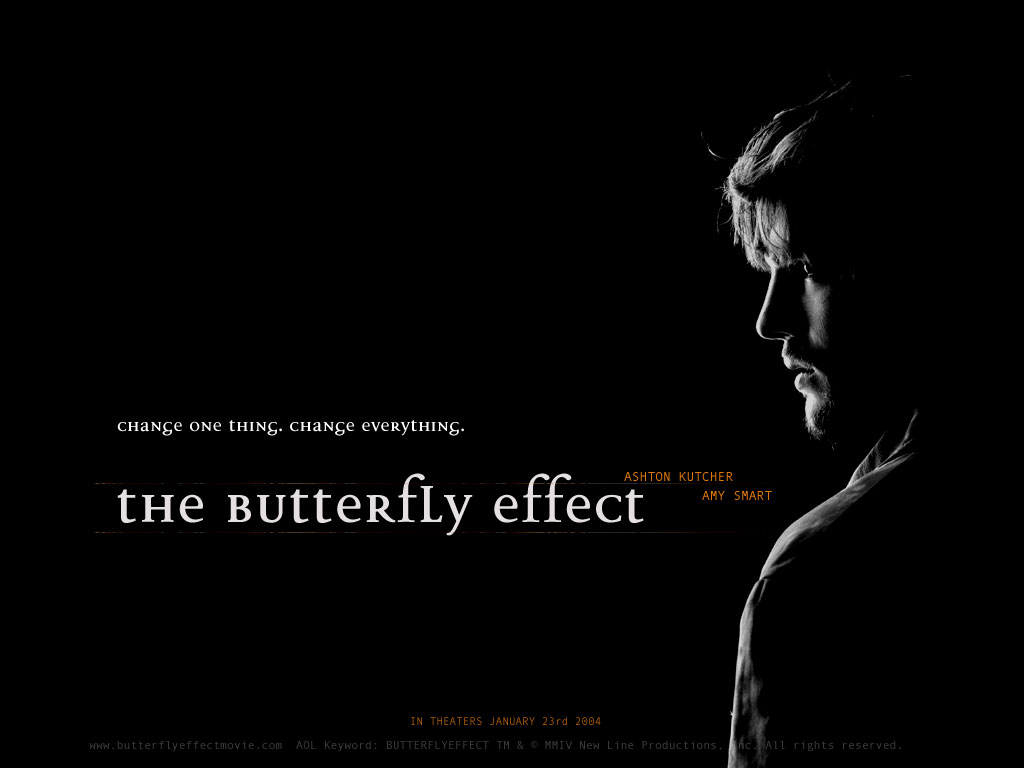 0:13 - 0:18; The music drastically changes-less dramatic more creepy! The pace of the text accelerates, as well as starting to flicker (which, we said before, is using iconography and representation of the main character's mental state.)
0:19 - 0:23; A new transition is used after we get introduced to "Amy Smart & Melora Walters"- they fizz out. (This is also representative because the main character subconsciously, fizzes out important memories, so he can't remember.) This may imply that she is a victim of what happens in the movie- maybe thanks to his mental well being?
0:24 - 0:28; We see a new piece of text, "do i have the power to heal them?" which creates more enigma. "Power? Power to control who?"
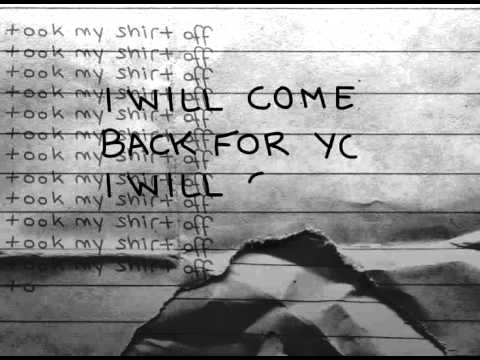 0:28 - 0:30; More enigma is created- "CUT THE ROPE". (Don't forget, the music is still creepy, it hasn't changed)
0:31 - 0:40; "I WILL COME BACK FOR YOU" is repeated, and then faded. This may give the impression that the character writing the credits is almost psycho-like? "took my shirt off' is repeated too- egotistical?
0:41 - End; We get the name of the movie.
The reason why this opening sequence is psychological horror, and not just horror is because the music messes with your head. You think something is going to happen, when really, nothing actually does. This is why the certificate on this film is 15+.
Sequence 1: The Butterfly Effect Opening Sequence
How is genre introduced?
The non-diegetic background music, more than anything else, represents the genre. However, the music does conotate with the text, even though the opening sequence is just credits. The text does somehow indicate part of the genre.
0:00 - 0:07; It tells us who the producers of the film are. The text flickers, which gives the sense that the motive isn't clear. As we find out, the flickering is iconic because it gives us an insight of the main character's main problem- He finds it difficult to remember thing, so his thoughts are always flickering about, and therefore aren't clear. Therefore, the opening sequence is representative of the main character.
The music is also very dramatic, and it gets creepy once we get to the notepad part of the credits. The text creates enigma because the first piece of text you see on the notepad is "how do i fix it?!" and "you never lost me." This will make the audience ask questions, which will be answered, eventually, in the film.
0:08 - 0:13; We find out that this is an Ashton Kutcher movie. The music stays the same, giving it the same feel as before.
0:13 - 0:18; The music drastically changes-less dramatic more creepy! The pace of the text accelerates, as well as starting to flicker (which, we said before, is using iconography and representation of the main character's mental state.)0:19 - 0:23; A new transition is used after we get introduced to "Amy Smart & Melora Walters"- they fizz out. (This is also representative because the main character subconsciously, fizzes out important memories, so he can't remember.) This may imply that she is a victim of what happens in the movie- maybe thanks to his mental well being?
0:24 - 0:28; We see a new piece of text, "do i have the power to heal them?" which creates more enigma. "Power? Power to control who?"
0:28 - 0:30; More enigma is created- "CUT THE ROPE". (Don't forget, the music is still creepy, it hasn't changed)0:31 - 0:40; "I WILL COME BACK FOR YOU" is repeated, and then faded. This may give the impression that the character writing the credits is almost psycho-like? "took my shirt off' is repeated too- egotistical?
0:41 - End; We get the name of the movie.
The reason why this opening sequence is psychological horror, and not just horror is because the music messes with your head. You think something is going to happen, when really, nothing actually does. This is why the certificate on this film is 15+.
Thursday, 11 December 2014
Preliminary Squence #1
For my coursework, me and three others produced a preliminary sequence, known as 'Feed The Fish'. We had to test our knowledge and understanding of what we've learnt this term (about camera angles, camera movements and editing) and display them in a production.
What Went Well? (WWW)
I thought that the way we used a range of shots to attempt to create a sense of enigma & tension was good, considering that it was our first production. I also like the way we used music to determine the genre.
Even Better If...? (EBI)
Firstly, I feel like we could have used a tripod to limit the shakiness (and the handheld effect) of some of the footage.
Secondly, I feel like we could have made the quality of the shots better. For example, we could have got down on the floor and filmed the girl walking outside as opposed to just standing and tracking. Laying down would have brought the focus more onto the feet walking, as well as limiting information as to where the girl is. It would've created more enigma.
Thirdly, I feel like we could have shot close ups of her face as she was coming up to the 'room' to create tension.
Fourthly, if we were able to do this again, is that we could have used lighting to create enigma. We could have filtered it on the video editor (Premiere Pro) if we were unable to create the effect when actually shooting it. We could have make the lighting darker to create the sense of thriller.
We could have also emphasised diegetic sound to make it sound realistic, as well as overlapping it with non-diegetic background music. We could have got sound effects.
Also, we could have stuck to a schedule in order to complete the task in a prompt manner, which would have allowed us to gain more time for editing.
What Went Well? (WWW)
I thought that the way we used a range of shots to attempt to create a sense of enigma & tension was good, considering that it was our first production. I also like the way we used music to determine the genre.
Even Better If...? (EBI)
Firstly, I feel like we could have used a tripod to limit the shakiness (and the handheld effect) of some of the footage.
Secondly, I feel like we could have made the quality of the shots better. For example, we could have got down on the floor and filmed the girl walking outside as opposed to just standing and tracking. Laying down would have brought the focus more onto the feet walking, as well as limiting information as to where the girl is. It would've created more enigma.
Thirdly, I feel like we could have shot close ups of her face as she was coming up to the 'room' to create tension.
Fourthly, if we were able to do this again, is that we could have used lighting to create enigma. We could have filtered it on the video editor (Premiere Pro) if we were unable to create the effect when actually shooting it. We could have make the lighting darker to create the sense of thriller.
We could have also emphasised diegetic sound to make it sound realistic, as well as overlapping it with non-diegetic background music. We could have got sound effects.
Also, we could have stuck to a schedule in order to complete the task in a prompt manner, which would have allowed us to gain more time for editing.
Wednesday, 10 December 2014
Art Of The Title: Anatomy Of A Murder (1959)
Typography elements:
The music used in the opening of 'Anatomy Of A Murder' suggests that the theme of the film is a crime/thriller one, as the music creates a sense of suspense and mystery. Connotations with 'mystery' is 'crime' and 'detectives', which connotes with fast action. The jazzy sounds not only enhances this view, but it is also used to build tension.
 The transition of the shots are also very quick, building suspense. It also creates enigma because it makes the viewer wonder who the body is, adding to the idea that it is a crime/thriller driven movie.
Monday, 1 December 2014
Opening Sequence - Harry Potter and The Philosopher's Stone
- The producers of the film are the Warner Brothers
- The music sets the genre; An epic fantasy adventure.
- Owl = Iconography for later on in the movie series
- Establishing shot to set the scene- a dark place = mystery & tension
- Albus Dumbledore = Stereotypical wizard (Mise-En-Scene) to indicate that this movie is going to be based around witches and wizards. (Also, introduction to our first character = he is very significant = creating enigma "Who is he?")
- Slower cutting of the first look at 'wizardry action' to (1) give the audience the time to take in that he is actually a wizard, rather than just assuming that he is an old man going trick or treating (for example) and (2) to give the sense that the action is taking place slowly.
- Introduction to both significant wizard characters and their status; Professor McGonagall and Albus Dumbledore. From the dialogue, you can see that McGonagall is the follower and Dumbledore is the leader because he knows all the answers to her questions.
- Hagrid: Low angle suggests that he is big in size (not status- his size actually contrasts status- although he is the biggest, he has the lowest status out of all three of them)
- Enigma about Harry
- The music sets the genre; An epic fantasy adventure.
- Owl = Iconography for later on in the movie series
- Establishing shot to set the scene- a dark place = mystery & tension
- Albus Dumbledore = Stereotypical wizard (Mise-En-Scene) to indicate that this movie is going to be based around witches and wizards. (Also, introduction to our first character = he is very significant = creating enigma "Who is he?")
- Slower cutting of the first look at 'wizardry action' to (1) give the audience the time to take in that he is actually a wizard, rather than just assuming that he is an old man going trick or treating (for example) and (2) to give the sense that the action is taking place slowly.
- Introduction to both significant wizard characters and their status; Professor McGonagall and Albus Dumbledore. From the dialogue, you can see that McGonagall is the follower and Dumbledore is the leader because he knows all the answers to her questions.
- Hagrid: Low angle suggests that he is big in size (not status- his size actually contrasts status- although he is the biggest, he has the lowest status out of all three of them)
- Enigma about Harry
Subscribe to:
Posts (Atom)